BUY thin brick
Slim in design, but powerful in performance.
Uniquely manufactured, featuring the physical characteristics of a facing brick , indistinguishable from conventional brickwork – available in over 2,500 variations. Flexibility and cost-effectiveness in perfect balance.
DOWNLOADS
All our products are developed and manufactured in Germany. Therefore, all our products are "MADE IN GERMANY" – a distinction that enjoys special recognition worldwide and stands for outstanding quality.
thin brick
You are familiar with these challenges for facades – thin brick solves them
Are you planning a facade renovation or a new building? Many building owners and architects are familiar with these typical problems:
Missing foundation during old building renovation
Existing buildings often lack the necessary foundation for renovation using facing brickwork.
→ Feldhaus solution:
thin brick are only 9-35 mm thick and weigh only about 19-27 kg/m² – ideal for renovations with an ETICS system that also works without foundation reinforcement.
Plaster becomes unsightly over time
Plastered facades can turn grey or become covered in algae after just a few years.
→ Feldhaus solution:
thin brick (fired at 1,100-1,300°C) retain their unique color because they are completely colorfast. thin brick are also fired at high temperatures – algae have no chance. For a facade that needs no apologies.
Increasing demands on environmental compatibility
Sustainability requirements for renovation and new construction are increasing. Many systems shine in their initial assessment – and then fail over their life cycles.
→ Feldhaus solution:
thin brick made of clay and loam of regional origin in Germany. Very long service life - lasts for generations. Reduced maintenance for decades. 👉 Result: Sustainability through not having to renew – the most honest form of ecology.
Clinker imitation with limited durability
Cheap facade strips made of bitumen, concrete or artificial stone can, due to their material properties, chip off, fade or simply become unsightly after just a few winters.
→ Feldhaus solution:
Genuine thin brick are frost-resistant, weather-resistant and maintenance-free – for decades.

Innovation made from fired clay
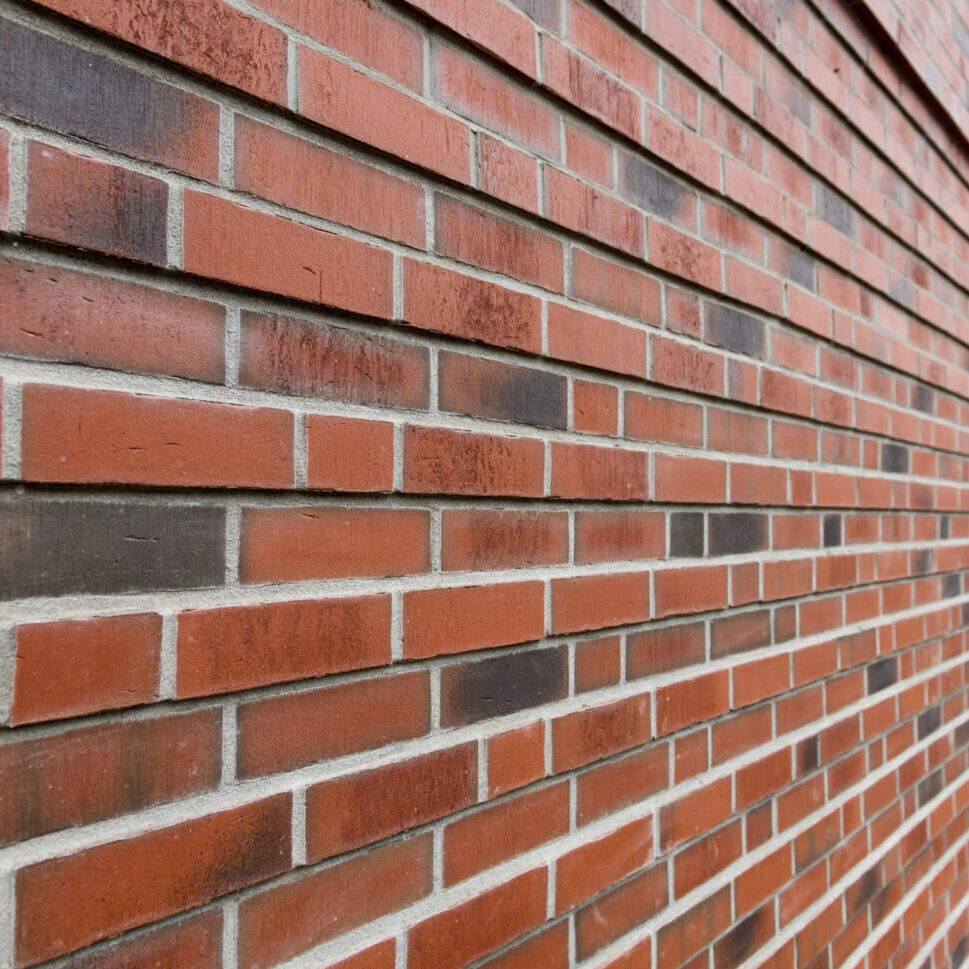
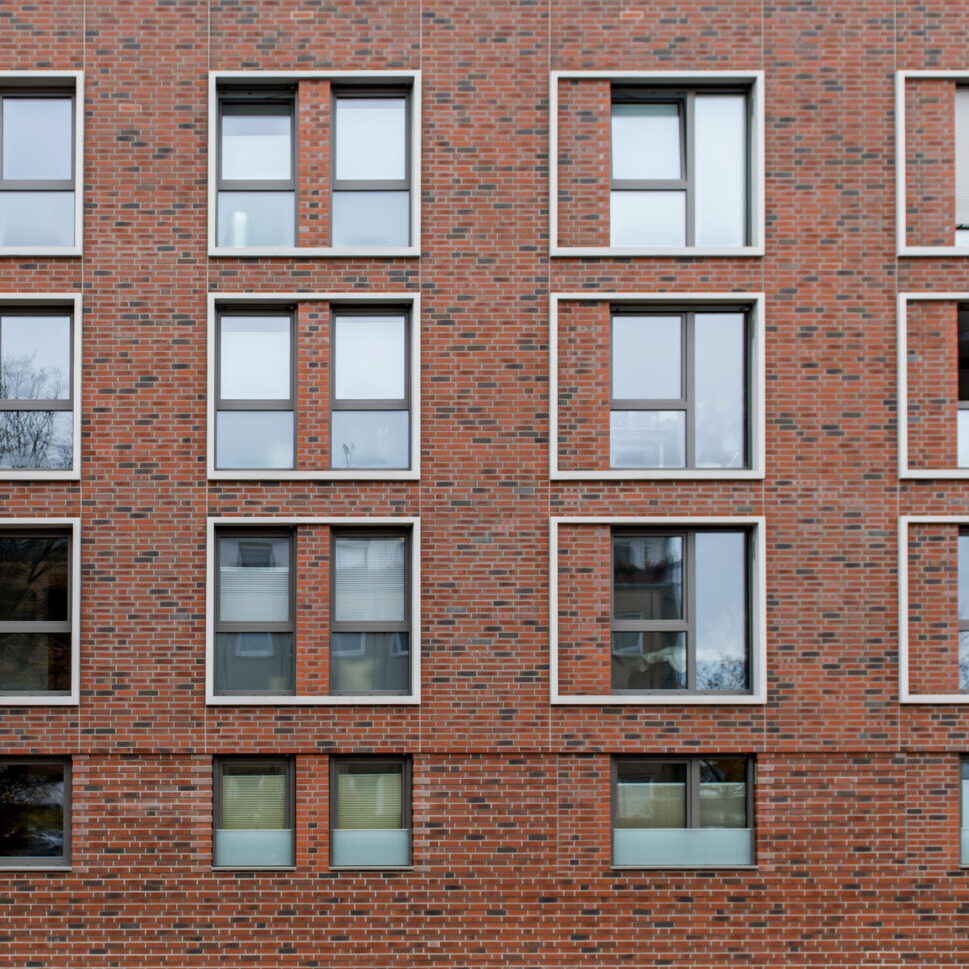
thin brick are high-quality, coarse ceramic products made from natural raw materials and fired at approximately 1,150 °C. Unlike conventionally sawn bricks, Feldhaus produces the brick slips directly to the desired thickness: no sawing – no waste. This process conserves resources and underscores the environmental friendliness of this building material. The same applies to corner brick slips, which are specially pressed into an angled shape to meet the high aesthetic standards of modern architecture.
Aesthetics and design freedom for every facade
thin brick offer the look of a classic brick wall and provide architects with a design range that is in no way inferior to that of facing brick . With a thickness of 9 to 35 mm, they also offer additional functional advantages – ideal for new construction projects and renovations alike. The brick slips allow for maximum flexibility in execution with minimal stress on the building structure.
Advantages of modern building concepts
- Lightweight, maximum flexibility: thin brick can be used almost anywhere, regardless of the load-bearing capacity of the building structure. They weigh only about 27 kg per square meter, representing a significant weight saving compared to solid clinker bricks.
- Gain living space through optimized wall thickness: The reduced wall thickness allows for an increase in usable floor space without compromising insulation values. This solution is particularly advantageous in new construction, where every square meter counts.
- Efficient renovation without major interventions: thin brick requires neither additional foundation reinforcements nor roof extensions – a significant saving in time and costs when modernizing existing buildings.
Sustainable protection and longevity
In combination with a high-quality external thermal insulation composite system (ETICS), brick slips and corner brick slips offer a durable solution for building envelopes. Thanks to a wide selection of colors, formats, and surfaces, they meet both aesthetic and technical requirements and sustainably enhance any construction project.
For architects, investors and building owners who value efficiency, resource conservation and a timeless aesthetic, thin brick are the ideal choice for a durable facade design.
thin brick
PROVEN PROPERTIES FROM NATURAL CLAY
thin brick are made from natural, fired clay and therefore possess the same positive physical properties as classic facing brick : they have low water absorption and are colorfast and frost-resistant. Feldhaus Klinkerslips require no subsequent maintenance, protect the building from wind and weather, and also sustainably increase the value of your property.
These brick slips combine all the advantages of modern construction technology with the proven properties of traditional clinker bricks. Expert workmanship guarantees decades of durability and a consistent appearance without any loss of quality.
Features at a glance:
- Frost-resistant : Low water absorption protects against frost damage.
- Resource-efficient : Direct production without waste
- Low water absorption : Protection against the elements
- Colorfast : UV-resistant surface permanently retains its color.
- Weatherproof : Protection in all weather conditions
- Non-flammable : Fire class A1 for maximum safety
- Suitable for ETICS : Optimal fastening on external thermal insulation composite systems.
- Compliant with standards : Meets all relevant building regulations.

thin brick
VARIETY OF SURFACES FOR EVERY STYLE
Every Feldhaus product line stands for a special and natural surface – full of life, harmonious down to the last detail. The various surface finishes ensure that each object has a unique character and combines all the advantages of modern industrial manufacturing with the look of traditional craftsmanship.
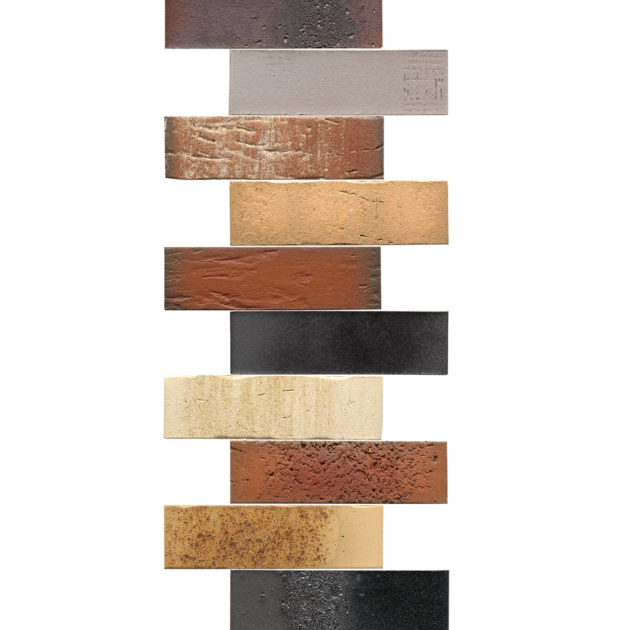
Feldhaus thin brick offer countless surface textures: smooth for a modern atmosphere, grained for a vibrant look, sanded for a natural appearance, engobed for special color effects, and rustic in hand-molded, water-struck, and foot-sorted finishes. From bright red to a variety of colorful blends and elegant dark tones in gray or other modern shades.
Surface options for individual design:
Smooth surface : Contemporary look for modern architecture. Textured structure : Lively appearance with a natural feel.
Sanded surface : Authentic sand look for a rustic character. Engobed brick slips : Special color effects through clay slips. Hand-molded look : Traditional character like that of historic stones. Water-struck look : Classic look with characteristic grooves.
thin brick
COLORS AS DESIGN ELEMENTS OF THE FACADE
The color of the bricks is considered an important design element of a facade. While dark bricks tend to appear more massive and visually reduce the building's height, light bricks visually elongate the entire building. Feldhaus offers bricks in almost all color shades, from warm reds to modern grays.
The wide range of colors, from light to dark, as well as classic reds and browns, shows that there's something for every regional preference – a color assortment that leaves nothing to be desired. Depending on the color and surface finish, completely different effects are created on the facade, shaping the character of the entire building.
Color effect and options:
- Light colors : Visually lengthen the building and create a friendly atmosphere.
- Dark colors : They lend mass and reduce the visual height.
- Grey tones : Modern and timeless, perfect for contemporary architecture
- Red brick : Classic and warm, traditionally proven
- Colorful mixes : Vibrant appearance through natural color variations

thin brick
FAQ
General information about thin brick
thin brick are thin brick panels made of fired clay, used as protective facade cladding or decorative interior elements. These wall cladding panels offer a wide range of design possibilities for facades and interiors. Due to their material and in combination with the appropriate corner pieces, there is no visible difference to solid brickwork.
Clinker brick slips are a popular product for cladding buildings in new construction and renovations. They combine all the properties of genuine clinker bricks with significantly reduced weight and expanded application possibilities.
thin brick are thinner (usually 14 mm), while (solid) clinker bricks are typically 115 mm thick. Their reduced thickness makes them the ideal choice for facade cladding where weight and wall thickness are crucial.
While solid clinker bricks place considerable structural demands on the installation, brick slips offer maximum flexibility. Brick slips weigh only about 27 kg per square meter, compared to several hundred kilograms for solid bricks.
They typically have a thickness of 14 mm, making them more space-saving compared to facing brick . Depending on the product series, the minimum thickness is 9 mm and the maximum is 35 mm. Many increments are available to meet various requirements. These different thicknesses allow for flexible adaptation to the needs of different wall surfaces and finishes.
Depending on the format, they typically weigh 27 kg per square meter. This is in addition to the weight of the jointing mortar, adhesive, reinforcing plaster with mesh, and insulation material if it is used in an ETICS (External Thermal Insulation Composite System). Weight is an important factor in selecting the appropriate fastening system and in structural calculations.
The costs vary depending on the format and product line, but are generally between €30 and €60 (plus VAT) per square meter and can be purchased from building material suppliers. The price depends on various factors such as surface finish, color, and size. These prices per square meter make brick slips an economical solution for high-quality facade design.
Despite the many advantages, potential disadvantages should also be honestly considered:
Higher initial investment : Material costs are higher than for simple plastered facades, but are offset by durability and increased value. The facade never needs to be painted again.
Professional processing required : Fastening requires expertise and experience, especially when used with ETICS systems.
Repair costs : Individual damaged brick slips are more difficult to replace than with other facade systems.
Additional weight : Although less than with solid bricks, thin brick facades still place additional stress on the building structure. However, a thin brick facade does not place any static demands on the building envelope.
However, these disadvantages are more than compensated for by the long-term advantages such as maintenance-free operation, longevity and increased value.
The most common format for thin brick in Germany is the standard format NF (240 x 71 mm visible surface). Another popular format is the thin format DF (240 x 52 mm visible surface). In addition, there is the long thin format LDF (290 x 52 mm visible surface), the extra-long XLDF Waal thick format WDF (215 x 65 mm visible surface), which is commonly used for hand-molded surfaces
Furthermore, there are a number of regionally typical formats, such as the modular format , which, however, play a rather minor role. For all the formats mentioned, there are corresponding corner tiles for building corners, enabling professional execution down to the smallest detail.
We sell our products exclusively through building material suppliers. Give us a call, and we'll be happy to provide you with the contact information for a supplier near you. We're also happy to assist you in finding the right contact person.
DIN 18515-1 regulates the requirements for exterior wall cladding with tiles and slabs. This standard is also relevant for the processing of thin brick and defines important quality standards for proper fastening and installation.
Sustainability and certifications
thin brick are made from natural components such as clay and are very durable, making them an environmentally friendly product. Furthermore, thin brick are produced in the desired thickness, eliminating the need to saw entire bricks and thus conserving natural resources.
The durability and quality of the brick slips make them a sustainable choice for facades. Their production using regional clay reduces transport distances and supports the local economy.
When professionally installed, they last for decades without losing quality or appearance. They are made from the same material as facing brick . This means they are fired at high temperatures, making them robust, frost-resistant, and colorfast. Their longevity makes them an economical solution for brick facades that will last for generations.
There is an EPD (Environmental Product Declaration) , which describes and measures the natural properties and components. This EPD can be used for building certification and supports sustainable construction.
Availability and customization
Yes, thin brick are available in various colors, textures, and finishes, from smooth to rustic, from cream to black, including modern gray tones. The wide range of options allows for customized designs to suit any brick wall and architectural style.
Standard production is controlled by the recipes. Deviations from the recipe are subject to minimum quantity requirements due to production constraints. For special requirements, test firings may be necessary. We would be happy to discuss the possibilities and parameters of customization for specific projects.
For special colors or surface textures, we will gladly create samples in consultation with you, enabling you to make an informed decision.
As with all building materials, it's advisable to inquire about availability early. Timely planning ensures on-time delivery for your construction project.
Applications and properties
Yes, thin brick are frost and weather resistant, making them an ideal and high-quality protective shield for your property. Frost resistance is an important characteristic for outdoor use and guarantees decades of durability without any loss of quality.
Yes, they are not only heat-resistant but also non-combustible (fire class A1) and are therefore well-suited for use around fireplaces or near stoves. In combination with an external thermal insulation composite system (ETICS) made of mineral wool or other non-combustible insulation materials, they can be part of a fire protection concept for exterior applications.
thin brick require no special care. Their robust properties and low water absorption make them virtually maintenance-free. Dirt from dust or other contaminants is usually washed away by natural rain.
Due to their robust properties thin brick are primarily suitable for use in exposed outdoor areas, such as facades or garden walls. However, they are also used indoors, for example as a design element for kitchen backsplashes, behind fireplaces, or in stairwells.
The possibility of using it indoors and outdoors makes it a versatile facing material for all applications.
thin brick themselves offer no significant insulating properties. Therefore, they are usually used in combination with an external thermal insulation composite system (ETICS) or on top of insulating bricks. This solution combines optimal insulation values with an authentic brick look.
A thin brick facade develops character over time – think of the buildings in Hamburg's Speicherstadt. It makes no significant difference whether the surface is smooth or textured. Dust is generally washed away by rain.
thin brick are ceramic products made from fired clay, which are fired at high temperatures of approximately 1,150°C. These ceramic properties give them their characteristic appearance, hardness, and resistance to all weather conditions.
High-quality thin brick have very low water absorption, which contributes to their frost resistance and durability. Water can hardly penetrate the material and cause damage, ensuring its durability for decades.
The advantages of thin brick lie in their durability, low water absorption, frost resistance, and the wide variety of available colors and finishes. They offer all the properties of genuine clinker bricks with significantly less weight and a broader range of applications.
Processing of thin brick
They are glued to a prepared mortar bed using special adhesive mortar and then grouted, similar to facing brick n. The selection of the correct adhesive mortar is either specified by the system manufacturer of the ETICS (External Thermal Insulation Composite System) used, or – if no ETICS is used – your building materials supplier can advise you.
During processing, all requirements of the relevant standards must be observed to ensure a permanent and secure fastening.
The floating buttering method is a special bonding technique in which both the back of the thin brick and the wall surface are coated with adhesive mortar. This ensures optimal adhesion and avoids processing errors caused by full-surface bonding.
Yes, thin brick can be easily installed on ETICS (External Thermal Insulation Composite Systems), although special adhesives and mortars should be used in conjunction with reinforcing mesh and anchors. The processing guidelines of the ETICS manufacturers apply here. All reputable ETICS manufacturers now offer special systems for thin brick .
Brick slips can be applied to any sound and clean substrate. The base coat must be free of dust, contaminants, and release agents to ensure permanent adhesion. The installing contractor can provide further information on optimal substrate preparation.
Many manufacturers of ETICS (External Thermal Insulation Composite Systems) offer systems specifically designed for thin brick (polystyrene and mineral wool). Furthermore, they can be applied monolithically, i.e., directly onto a thermal insulation brick with a suitable base coat.
Even a substrate made of aerated concrete is suitable with appropriate preparation. There are also factory-prefabricated insulation elements with thin brick that are glued and anchored to the existing walls. Ventilated curtain wall systems (VHF) based on cement fiberboards or rail systems are primarily used in large-scale projects.
The application surface must be free of dust, contaminants, and release agents. A suitable primer is crucial for the permanent fixing of the thin brick . The surface should be load-bearing, level, and clean to ensure optimal adhesion of the adhesive mortar.
thin brick offer numerous possibilities for creative use on facades. Accents can be created, for example, through the laying pattern or brickwork bond, or by using different colors. Another option is to use different thicknesses of thin brick , such as alternating 14 and 25 mm.
In addition, there are various surface geometries such as curves, wedge shapes, partial structures and much more to create visual accents on the wall.
thin brick are typically laid in a random pattern using headers and stretchers. The stretcher bond, on the other hand, does not use headers at all. Other patterns are less common in practice.
An overview of the associations can be found feldhaus : https://www.feldhaus-klinker.de/download/153/ratgeber/28281/mauerwerksverbaende.pdf
That depends on your own craftsmanship 😊. Prior knowledge of surface layout, brickwork patterns, and substrate preparation is definitely helpful. Working with them indoors is easier, as there are generally no requirements for moisture and heat protection, and the thin brick primarily serve a decorative purpose.
For exterior applications, we recommend using an ETICS (External Thermal Insulation Composite System) specifically designed for thin brick . These systems include all necessary materials, such as insulation, anchors, screws, adhesives, reinforcing mortar and mesh, as well as the appropriate brick joint mortar.
Painting Company are often the ones most familiar with the installation of ETICS (External Thermal Insulation Composite Systems). Ask if the Company also has experience working with thin brick . We would be happy to assist you in finding a suitable installer for our thin brick .
In addition to adhesive mortar, special tools such as jointing trowels are required for working with thin brick . These enable clean and professional joint finishing.
The joint between the thin brick is filled with special brick jointing mortar and professionally smoothed with a jointing trowel. The joint design has a significant impact on the appearance and durability of the entire wall and should be executed professionally.
The number of pieces required per square meter depends on the chosen format. For the NF format, approximately 48 pieces per square meter are needed, while the DF format requires correspondingly more (64 pieces) due to its smaller size. This information is important for ordering materials and calculating costs. These figures are based on a joint thickness of 10–12 mm.
Yes, there are special corner tiles (corners) for building corners that allow for clean and professional installation. These corner tiles are available in all common sizes and are produced directly in the required thickness and shape.
Feldhaus Klinker is the inventor of the corner brick slips and has many decades of experience in their production. The corner pieces are produced directly in the required thickness and shape, eliminating the need to saw the entire brick and ensuring optimal fit.
OBJECT Advisory service
Specialist Advisory service
Would you like to purchase our products but don't know where to find them? Or do you have a technical question? Then please get in touch. To ensure you always find the right contact person locally for your needs and questions, our Advisory service Team is divided by postal code region. Simply enter your postal code and contact us directly during our business hours.