
Feldhaus Klinker receives coveted design award
Accent brick slips awarded the Red Dot Award
The Red Dot Award, one of the most renowned design competitions worldwide, honors outstanding achievements in various design categories every year. This year, Feldhaus Klinker convinced the international jury with the innovative approach and the outstanding design of its accent bricks.
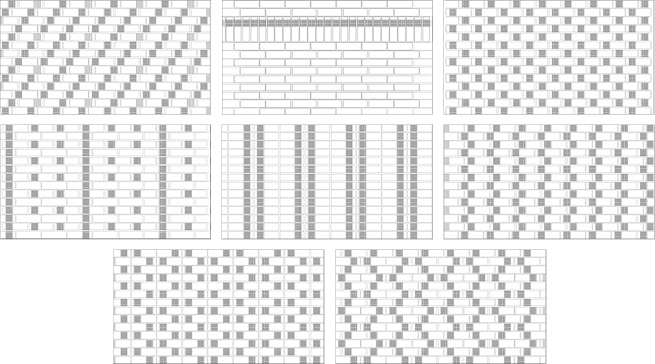
The two award-winning accent bricks from Feldhaus Klinker embody the fusion of aesthetics and functionality in urban spaces. Their timeless design, versatile application possibilities, and resource-efficient production make them outstanding elements for architectural projects in urban environments. While the thin brick "Form 21" stands out due to its unique geometry, the thin brick with comb structure distinguishes itself through its color-changing effect. Depending on the viewing angle, it alters its visual appearance.
The products were selected from hundreds of submissions from around the world and honored for their outstanding design quality. The Red Dot Award underscores the position of Feldhaus Klinker as a leading provider of clinker products that not only meet the highest aesthetic standards but also fulfill the requirements for Sustainability and functionality.
Feldhaus Klinker would like to invite you to use the proven and durable thin brick creatively in order to set accents in facade design. Individual shaping is not only possible but desired.
The advantages are manifold:
- proven material: fired clay has been used for thousands of years
- resource-efficient production: In contrast to facing brick, fewer raw materials are consumed
- the accent brick slips are produced directly in the desired shape and thickness. Massive shaped bricks are therefore a thing of the past
- thin brick offer elemental protection: They form a ceramic protective shield against rain, wind and weather
- long life cycle with minimal maintenance.
- many options for refinement
- individual geometries
This short film clearly demonstrates the color-changing effect.


You are currently viewing a placeholder content from Issuu.com. To access the actual content, click the button below. Please note that data will be passed on to third-party providers.
Further information '